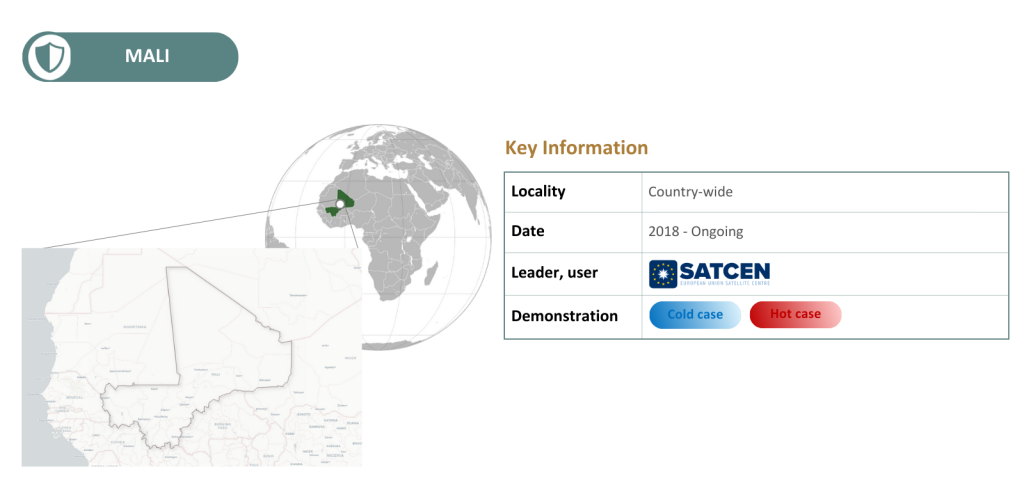
Mali, located in the climate-vulnerable Sahel, faces recurring water deficits and highly variable rainfall patterns. These conditions place pressure on agriculture and pastoral livelihoods, with droughts and floods affecting both food production and access to water. Climatic stressors can intensify existing socio-economic challenges, contributing to poverty and livelihood insecurity. At the same time, tensions between farming and herding communities may be exacerbated by the presence of extremist groups and militias, adding a layer of complexity to local disputes.
The Mali case provides a context for examining how water scarcity, food insecurity, and conflict dynamics can interact in the Sahel, providing insights which may be relevant for the wider region.
Indicators to be tested:
Meteorological drought indicator (Monitoring)
Meteorological drought indicator (Forecast)
Meteorological drought indicator (calibrated in danger levels)